

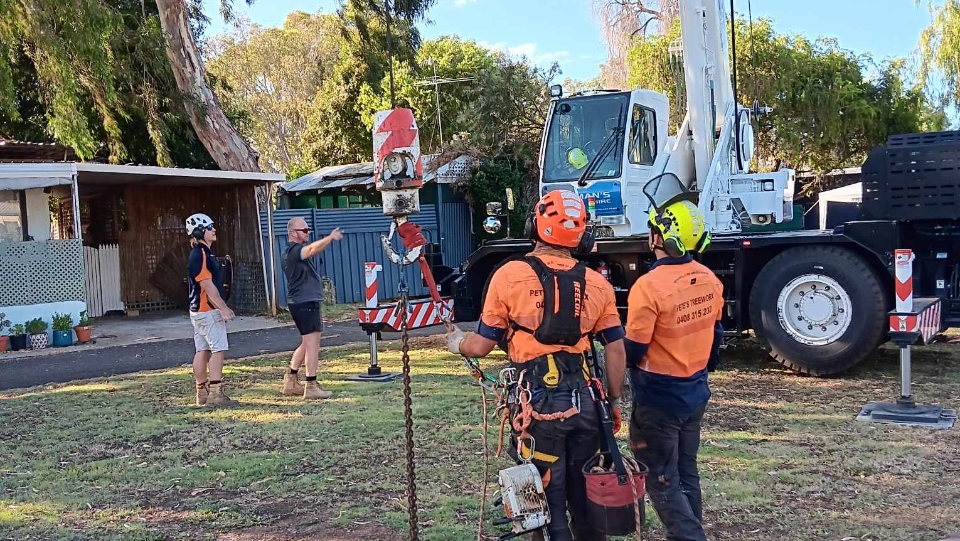
If you have a tree that looks unhealthy, has become difficult to manage or is growing close to your home, you may wonder whether you need an arborist. An arborist is a tree-care professional who works with trees and can provide advice on their health, structure, safety and management.
For homeowners looking for experienced arborists servicing Mandurah, professional advice can be particularly useful when a tree is large, storm-damaged or located close to buildings, power infrastructure or areas used by people.
An arborist does much more than remove trees. Depending on their qualifications and experience, their work can include tree inspections, pruning, hazard identification, health assessments, tree protection, risk management and recommendations about whether a tree should be retained or removed.
For property owners searching for arborist Mandurah services, understanding what an arborist actually does can help you choose the right professional for the job.
What Is an Arborist?
An arborist is a professional who specialises in the care and management of trees.
Their knowledge can cover tree biology, structure, health, pruning, risk assessment and the environmental conditions that affect tree growth.
An arborist considers the individual tree as well as its surroundings. A mature tree beside a house, for example, presents different management considerations from a similar tree growing in an open rural paddock.
The aim is not simply to cut branches. Good arboricultural practice considers the condition of the tree, the reason for the work and the potential consequences of different management options.
What Does an Arborist Do?
The exact services provided by an arborist vary depending on their qualifications, experience and area of practice.
Common arboricultural services can include:
- Tree health inspections
- Structural assessments
- Pruning recommendations
- Hazard identification
- Tree risk assessments
- Storm-damage assessments
- Tree removal
- Tree protection
- Advice for construction projects
- Pest and disease identification
- Written arboricultural reports
An arborist may recommend retaining a tree with appropriate maintenance rather than removing it.
In other situations, removal may be the safest or most practical option.
Tree Inspections and Assessments
One of the most common reasons property owners contact an arborist is to find out whether a tree is healthy and structurally sound.
During an inspection, an arborist may examine the trunk, branches, canopy, root area and surrounding site.
What Does an Arborist Look For?
Potential warning signs can include:
- Dead or hanging branches
- Cracks in branches or the trunk
- Weak branch unions
- Cavities
- Fungal growth
- Root damage
- Significant leaning
- Storm damage
- Poor previous pruning
- Declining canopy health
Not every defect means a tree needs to be removed.
An experienced arborist considers the severity of the defect, the tree species, the surrounding environment and what could be affected if a branch or tree failed.
Tree Pruning and Maintenance
Pruning is another important part of professional tree care.
Correctly planned pruning can help manage deadwood, improve clearance and address selected structural issues.
However, excessive or poorly performed pruning can create unnecessary wounds and affect the tree’s natural structure.
An arborist can determine what type of pruning may be appropriate based on the tree’s condition and purpose.
For example, a mature tree growing over a driveway may require clearance work, while a young tree may benefit from structural pruning to encourage a better long-term form.
The objective should be targeted tree management rather than removing large amounts of canopy unnecessarily.
Tree Removal
Although an arborist’s role is not limited to tree removal, removal can be appropriate when a tree has become hazardous, is severely declining or cannot be safely retained.
Before recommending removal, an arborist may consider whether pruning, monitoring or another management approach could reduce the identified risk.
Where removal is required, the practical work needs to be carefully planned.
Large trees may need to be dismantled in sections, particularly where they are close to houses, sheds, fences, pools or other structures.
Site conditions and access should always be considered before significant tree work begins, particularly when working around buildings, structures or other potential hazards.
Arborists and Storm-Damaged Trees
Storms can significantly change the condition of a tree.
High winds can break large branches, split branch unions, damage trunks or disturb root systems.
A tree that appeared stable before a storm may present new hazards afterwards.
What Should You Do After Storm Damage?
If you notice a damaged tree after severe weather, keep people away from the area and avoid attempting to cut large branches yourself.
Branches under tension can move unexpectedly, while damaged trees may be unstable.
Where it is safe to do so, photographs can help document the damage.
An arborist can then assess the visible condition and advise whether emergency pruning, removal, further investigation or ongoing monitoring may be appropriate.
Arborists and Tree Health
Trees can experience stress for many reasons.
Changes to soil conditions, drought, root disturbance, pests, disease, construction and poor pruning can all affect tree health.
An arborist can look for signs of decline and help identify appropriate management options.
This is particularly useful for mature trees because early intervention may provide more options for retaining the tree.
Common Signs of Poor Tree Health
Property owners should pay attention to:
- Unusual leaf loss
- Dead branches
- Discoloured foliage
- Fungal growth
- Dieback
- Cracked bark
- Poor new growth
- Root damage
- Sudden changes after storms
These signs do not automatically identify a specific disease or structural problem.
Professional assessment may be required to determine the underlying cause.
What an Arborist Does Differently from a Tree Lopper
The terms arborist and tree lopper are sometimes used interchangeably, but they can describe different aspects of tree work.
Tree lopping generally refers to substantial branch or canopy reduction, while arboriculture encompasses the broader science and practice of managing trees.
An arborist may assess whether significant pruning is appropriate in the first place.
This distinction matters because reducing a tree’s size is not always the best solution.
Good tree management considers the long-term structure and health of the tree rather than focusing only on immediate canopy reduction.
Arborist Services for Mandurah Properties
Mandurah has a diverse mix of properties, from established suburban homes to rural and rural-residential blocks.
This means arborists can encounter very different site conditions.
Residential Properties
Trees around homes may be located close to:
- Roofs
- Driveways
- Garages
- Fences
- Swimming pools
- Outdoor entertaining areas
- Power infrastructure
Restricted access can also affect how tree work is completed.
A narrow side passage may prevent machinery from reaching a backyard, requiring branches to be carefully dismantled and lowered instead.
Rural and Rural-Residential Properties
Larger Mandurah properties can contain mature native vegetation and trees growing outside the immediate residential area.
The City of Mandurah advises that native vegetation outside approved building envelopes on rural and rural-residential properties may be protected, subject to applicable exemptions and requirements.
This means property owners should check local requirements before arranging significant clearing, pruning or removal.
When Should You Hire a Professional Arborist?
Knowing when to seek professional advice can help property owners make better decisions about tree health, safety and maintenance. Some tree problems are easy to identify, while others may require a closer assessment of the tree’s structure and surrounding conditions.
For homeowners dealing with large, damaged or difficult-to-manage trees, professional arborists in Mandurah can assess the situation and recommend the most appropriate approach.
Professional advice can be particularly useful when a tree is located close to a house, powerlines, driveway or other structures. An arborist can assess potential hazards and explain whether pruning, monitoring, treatment or removal may be appropriate.
Seeking advice early can also help property owners understand their options before a minor tree issue develops into a more significant safety or management concern.
Common Trees an Arborist May Work With
Mandurah and the wider Perth region contain a range of native and established tree species.
These can include:
- Tuart
- Marri
- Jarrah
- Peppermint
- Eucalyptus species
- River red gum
- Sheoak
Different species have different growth habits, wood characteristics, canopy structures and environmental requirements.
An arborist considers these characteristics when assessing a tree rather than applying the same approach to every species.
Local Conditions That Can Affect Tree Work
Site conditions are an important part of professional tree management.
Mandurah properties can experience coastal exposure, sandy soils, changing ground conditions and strong winds.
Following heavy rain, access may also become more difficult on some properties, particularly where machinery needs to travel across soft or uneven ground.
An arborist or tree-care professional should consider these factors before planning work.
Council Requirements in Mandurah
Tree work on private property can be subject to local requirements.
The City of Mandurah identifies Tree Approval Areas where certain vegetation is protected and written permission may be required before trees are removed, pruned or altered.
These areas can include vegetation near waterways, certain rural and residential areas, large lots and trees recorded on the Significant Tree Register.
Street trees are also managed separately from trees on private property.
Property owners should therefore check the City of Mandurah’s current requirements before undertaking significant tree work.
Arborist Reports and Professional Advice
An arborist may also prepare written reports when a property owner, developer, council or other party requires documented information about a tree.
A report can potentially address matters such as:
- Tree condition
- Species identification
- Structural concerns
- Risk considerations
- Recommended management
- Pruning requirements
- Removal recommendations
- Tree protection measures
The type and level of report required depends on its intended purpose.
For example, a homeowner wanting general advice about a backyard tree may not need the same documentation as a developer preparing information for a planning application.
What Is a Level 5 Arborist?
You may also encounter the term “Level 5 arborist” when researching professional tree services.
The phrase generally relates to a higher level of formal vocational education, commonly associated with diploma-level study under the Australian Qualifications Framework.
This type of education can involve more advanced knowledge of tree biology, assessment, management, risk and planning.
However, property owners should look at the specific qualification and experience of an individual rather than relying solely on a level number.
If you want to understand what a Level 5 arborist is, it is worth considering how higher-level training may apply to complex tree assessment and management decisions.
When Should You Call an Arborist?
You do not necessarily need to wait until a tree becomes an obvious hazard.
Consider seeking professional advice if:
- A large tree is leaning noticeably
- Major branches appear damaged
- You notice cavities or cracks
- Roots have been disturbed
- A tree has suffered storm damage
- Branches are growing over your home
- You are concerned about tree health
- You are planning construction near established trees
- You are unsure whether a tree should be removed
- You need advice before significant pruning
Early assessment can sometimes provide more options for managing a tree.
Why Professional Arboricultural Advice Matters
Trees are living structures that respond to their environment.
Removing branches can change the balance and structure of a canopy, while excavation can affect roots and soil conditions.
Professional assessment helps ensure that decisions are based on the individual tree rather than assumptions.
For homeowners, this can mean greater confidence when deciding whether to retain, prune, monitor or remove a tree.
It can also help identify hazards that may not be obvious to someone without arboricultural training.
Frequently Asked Questions
What exactly does an arborist do?
An arborist specialises in the care and management of trees. Depending on their qualifications and experience, they can inspect trees, assess health and structure, identify hazards, recommend pruning, manage tree risks and undertake or advise on tree removal.
Is an arborist the same as a tree surgeon?
The terms can be used differently depending on the region and business. In Australia, arborist is the common professional term for someone specialising in tree care and management. The important consideration is the individual’s qualifications, experience and scope of services.
Do arborists remove trees?
Yes. Tree removal can form part of an arborist’s services when a tree is hazardous, severely damaged, declining or otherwise unsuitable for retention. An arborist may also recommend pruning or monitoring where removal is not necessary.
How do I know if my tree needs an arborist?
Consider contacting an arborist if you notice significant cracks, dead branches, fungal growth, root damage, leaning, storm damage or declining health. Professional advice can also be useful before construction or major landscaping near established trees.
Can an arborist tell me if a tree is dangerous?
An arborist can assess visible defects, tree condition, surrounding targets and site factors to help determine the level of risk and appropriate management. The assessment should explain the relevant concerns and possible options.
How much does an arborist cost in Mandurah?
There is no single price because the cost depends on the type of assessment or tree work required. Tree size, access, location, complexity and whether a written report is required can all affect the final cost. A site-specific quote is the most reliable way to understand pricing.
Choosing an Arborist in Mandurah
When choosing a tree professional, consider more than price alone.
Look for relevant qualifications, practical experience, appropriate equipment and a clear approach to safety.
It is also useful to choose someone who can explain why a particular course of action is being recommended.
A professional should be willing to discuss whether pruning, monitoring or removal is appropriate rather than automatically recommending the most extensive work.
Local knowledge can also be valuable when properties involve Mandurah’s particular access conditions, native vegetation, coastal exposure and council requirements.
Get Professional Arborist Advice from Pete’s Treeworx
If you’re looking for an arborist Mandurah property owners can rely on for practical tree advice, Pete’s Treeworx can help assess your trees and discuss suitable management options.
Whether you’re concerned about storm damage, tree health, structural defects, pruning or potential removal, an on-site assessment can help you understand the condition of the tree and the next steps. For expert arborist services, contact Pete’s Treeworx to discuss your requirements.
Phone: 0408 315 232
Email: info@petestreeworx.com.au
Address:
754 Pinjarra Road
Furnissdale WA 6209
Australia
Contact Pete’s Treeworx today to arrange professional arboricultural advice for your Mandurah property.
