

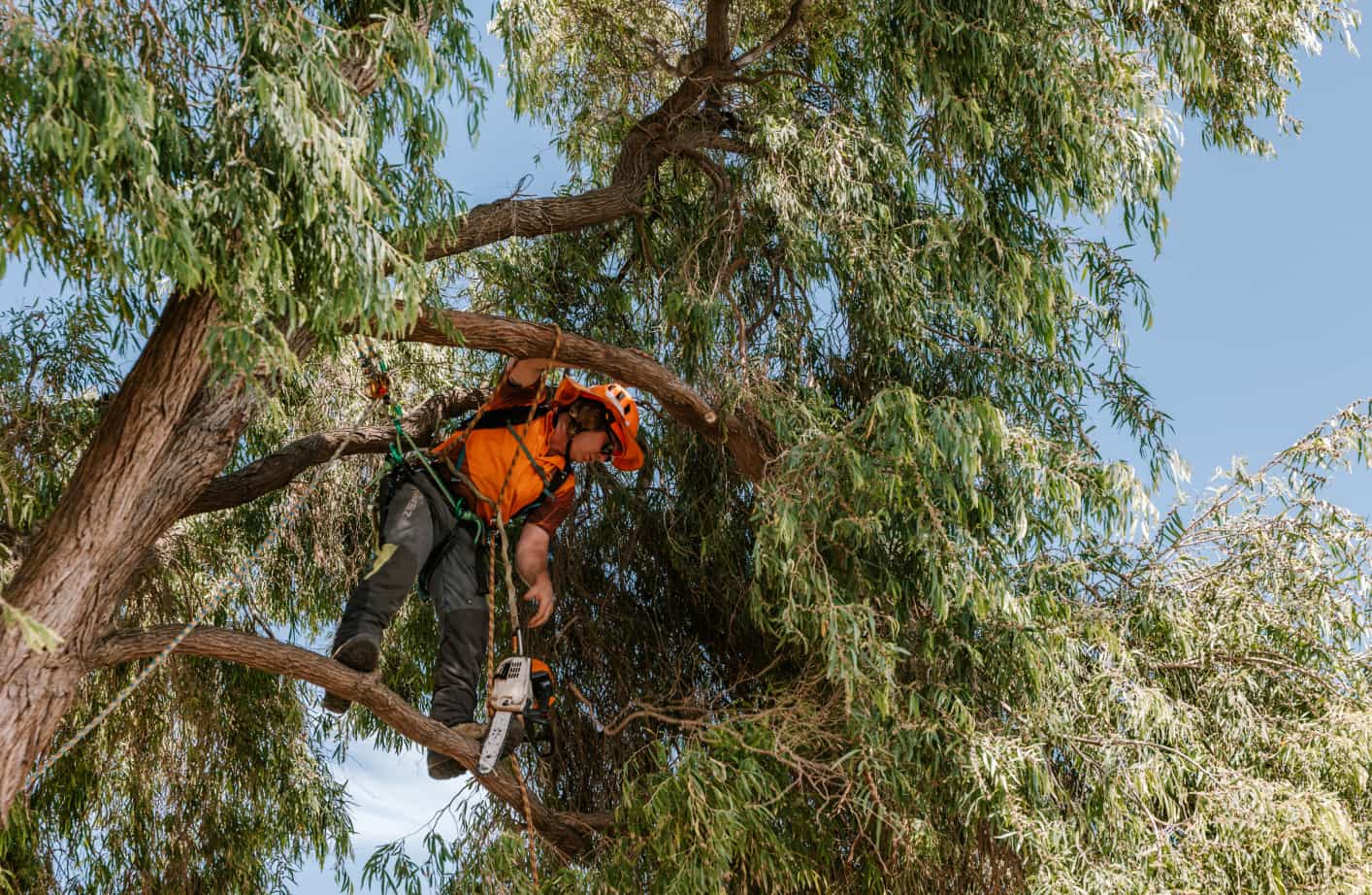
Bunbury’s coastal location means residents often experience unpredictable weather, including strong winds and heavy rainfall during storm season. While your garden adds natural beauty and value to your home, it’s also one of the most vulnerable areas during severe weather. Broken branches, uprooted trees, and damaged plants can quickly turn your beautiful outdoor space into a safety hazard. Fortunately, with proactive planning and regular maintenance, you can safeguard your garden and minimise the risk of storm damage.
At Pete’s Treeworx, our experienced Bunbury arborists provide expert tree care and garden protection strategies designed for local conditions. Here’s how you can keep your garden safe and thriving, no matter what the weather brings.
1. Inspect and Prune Your Trees Regularly
Regular tree pruning and trimming are essential to reduce storm risks. Overgrown, dead, or weak branches are more likely to break during high winds, potentially damaging your home or nearby power lines. A qualified arborist can assess each tree’s structure, identify potential hazards, and prune safely without compromising growth or balance. Pruning also improves air circulation, which helps trees withstand strong gusts.
2. Choose the Right Trees and Plants for Bunbury’s Climate
Some tree species are naturally more resilient to storms than others. When designing or updating your garden, select native or wind-resistant trees suited to Bunbury’s coastal conditions. Deep-rooted species such as peppermint and marri trees tend to anchor well in sandy soils. Consulting with local experts or your tree health inspection specialist can help you make informed choices that enhance both safety and longevity.
3. Strengthen Young and Newly Planted Trees
Young trees are particularly vulnerable during storms due to their underdeveloped root systems. Use quality stakes and flexible ties to provide support while allowing the trunk to move slightly and strengthen naturally. Avoid tying trees too tightly, as this can cause damage or restrict growth. Regular inspections will ensure your staking remains effective and doesn’t interfere with development.
4. Keep Gutters and Surrounding Areas Clear
Blocked gutters and debris near trees can exacerbate storm damage. Regularly clean leaves, branches, and organic matter from gutters, downpipes, and drains to prevent overflow and flooding. Clear pathways and remove fallen debris around your garden to ensure water can flow freely and reduce risks of soil erosion or damage to nearby plants.
5. Mulch and Improve Drainage
Heavy rains can lead to waterlogging, which weakens root systems and increases the risk of trees toppling over. Apply mulch around trees and garden beds to retain moisture, reduce erosion, and regulate soil temperature. You can also install proper drainage solutions such as French drains or gravel beds to direct excess water away from roots and foundations. For larger properties, a tree removal assessment might be necessary if drainage issues threaten structural integrity.
6. Identify and Remove Hazardous Trees
Some trees may already be compromised due to disease, age, or structural weakness. During pre-storm inspections, an arborist can identify whether a tree poses a danger to your home or neighbouring properties. Safe and professional tree removal is crucial to prevent property damage during high winds. Pete’s Treeworx provides reliable removal services across Bunbury, ensuring your property remains safe before and after storm season.
7. Secure Outdoor Furniture and Garden Features
Loose furniture, garden décor, and potted plants can become dangerous projectiles during strong winds. Before a storm hits, secure lightweight items, anchor larger structures like pergolas or gazebos, and store loose equipment in a sheltered area. Taking these small steps can prevent significant damage to your home and garden.
8. Plan for Post-Storm Clean-Up
After severe weather, inspect your garden for broken branches, leaning trees, or other hazards. Never attempt to remove large or unstable limbs yourself—contact a professional stump grinding and removal expert to handle it safely. Post-storm assessments help identify hidden damage and ensure your garden recovers quickly.
Why Hire a Professional Arborist in Bunbury?
Professional arborists have the training, equipment, and local experience to assess and maintain your trees effectively. DIY pruning or storm preparation can often do more harm than good. By working with a trusted Bunbury tree care specialist like Pete’s Treeworx, you ensure your garden receives safe, efficient, and environmentally responsible maintenance all year round.
Conclusion
Storms are a part of life in Bunbury, but with the right preparation and ongoing care, you can protect your garden and keep your property safe. From regular pruning and drainage maintenance to expert inspections and tree removals, proactive garden management makes all the difference. Whether you’re preparing for the next storm or recovering from one, Pete’s Treeworx is here to help.
Frequently Asked Questions
How often should I prune my trees in Bunbury?
Most trees benefit from annual pruning to remove weak or damaged branches. Some fast-growing species may need more frequent trimming.
Can I handle storm-damaged trees myself?
It’s best to contact a professional arborist. Handling damaged or fallen trees can be dangerous without the right equipment and expertise.
What should I do immediately after a storm?
Inspect your property for hazards, stay clear of downed power lines, and call a certified arborist to assess any tree damage safely.
Contact Pete’s Treeworx in Bunbury
Protect your Bunbury garden and property from storm damage with expert care from Pete’s Treeworx. Our certified arborists provide professional tree pruning, removal, and maintenance services designed for local conditions.
- 📞 Phone: 04 1234 5678
- 📧 Email: info@petestreeworx.com.au
- 🌐 Website: https://petestreeworx.com.au/location/bunbury/
Schedule a tree inspection today and get peace of mind knowing your Bunbury garden is protected from storm damage all year round.
